Kensington wedding bouquet case study before and after
Posted on 21/10/2026
If you are trying to understand what a Kensington wedding bouquet case study before and after actually looks like in real life, you are probably not looking for fluff. You want to see the difference a florist can make, what changed, why it changed, and whether those changes would work for your own wedding day. Fair enough. Weddings are expensive, emotional, and time-sensitive; nobody wants guesswork in the middle of that.
This guide breaks the topic down properly. You will see how a bouquet can evolve from a rough starting point into something that feels polished, balanced, and genuinely suited to a Kensington wedding setting. We will look at the creative process, the practical decisions behind the transformation, the kinds of flowers and styling choices that matter, and the common mistakes couples often make when they are trying to decide what their bouquet should be. Along the way, we will also point to useful related pages such as bridal bouquet options and wedding flower collections where relevant, so you can explore the wider picture without losing the thread.
Let's face it: a bouquet is small in size but huge in presence. It appears in photographs, in the ceremony, in the first nervous minutes before you walk in, and often in the memory you keep long after the day itself. That is why a before-and-after approach is so useful. It shows not just what looks pretty, but what actually works.
- Why this case study matters
- How the before-and-after process works
- Key benefits and practical advantages
- Who this is for and when it makes sense
- Step-by-step guidance
- Expert tips for better results
- Common mistakes to avoid
- Tools, resources and recommendations
- Law, compliance, standards, or best practice
- Options, methods, and comparison table
- Case study or real-world example
- Practical checklist
- Conclusion
- Frequently asked questions
Why Kensington wedding bouquet case study before and after Matters
A before-and-after bouquet case study matters because flowers are one of those wedding details that look simple until you start making decisions. Size, shape, stem length, flower choice, colour balance, ribbon finish, seasonality, and budget all pull in different directions. A case study gives you something concrete to compare instead of vague inspiration boards and dreamy language.
In Kensington, where weddings may range from intimate registry-style ceremonies to more formal, elegant celebrations, the bouquet often has to do a lot of work. It needs to suit the bride's dress, the venue, the season, and the tone of the day. A bouquet that looks beautiful in isolation can still feel wrong in the hand. Too large and it overwhelms. Too sparse and it disappears in photographs. Too trendy and it can feel dated in six months. Bit of a balancing act, really.
The real value of a case study is that it shows the why behind the visual change. You can see how a florist might refine an arrangement from "nice enough" to "this feels like the wedding." That might mean tightening the shape for a cleaner silhouette, adding softer movement for a romantic finish, or adjusting the palette so it sits more naturally against a dress and venue backdrop.
Expert summary: A strong bouquet transformation is not just about adding more flowers. It is about improving proportion, coherence, and emotional impact so the bouquet belongs to the wedding rather than simply existing in it.
There is also a trust factor here. Couples often want reassurance that the florist can translate ideas into something real. A case study makes that process visible. You can see the start point, the decisions made, and the final result. That transparency matters, especially when you are planning something this personal.
How Kensington wedding bouquet case study before and after Works
At its simplest, the process compares the bouquet concept before styling and the bouquet after professional refinement. But in practice, the transformation usually happens through a few clear stages.
1. The starting brief
The "before" stage usually begins with a client idea, a reference image, or a rough sense of mood. Sometimes the brief is crystal clear: ivory roses, understated greenery, classic shape. Other times it is more open-ended: something elegant, but not too formal; romantic, but not overly pink; modern, but still timeless. That vague middle ground is extremely normal. To be fair, most real wedding briefs live there.
2. The design interpretation
The florist then translates the brief into a workable design. In Kensington, that often means considering the setting and the overall feel of the day. A bouquet for a sleek town hall ceremony may need a crisper silhouette, while a garden or period venue might suit looser movement and fuller texture. Flower choice, stem length, and structure all get decided here.
3. The "before" composition
The before version may be a rough mock-up, a concept arrangement, or an early assembled bouquet. It can show where the design is too heavy, too flat, or not cohesive enough. This stage is useful because it reveals the problems honestly. You do not always know what needs fixing until the flowers are held together and seen from a distance.
4. The refinement stage
This is where the bouquet becomes much more considered. Stems might be trimmed for better balance. Blooms may be swapped for something cleaner or longer lasting. Colour may be softened or strengthened. Texture may be added carefully, not randomly. It is a bit like editing a sentence until every word earns its place. Only with petals.
5. The finished result
The after image should feel effortless, even though it is usually the result of quite a lot of thought. The bouquet should sit comfortably in the hand, photograph well from multiple angles, and still look fresh by the time the ceremony starts. That last bit matters more than people think. A bouquet can look spectacular at 9am and tired by 2pm if the mechanics are wrong.
If you are comparing styles, it helps to explore the wider range of arrangements available through pages like bridal bouquet styles or a more classic bridal option. Seeing the differences side by side can make the concept much easier to pin down.
Key Benefits and Practical Advantages
A bouquet case study is not just a nice visual exercise. It has real planning benefits. Here are the ones that matter most.
- Clearer decision-making: You can compare shape, colour, and scale without relying on imagination alone.
- Better budgeting: Seeing what changed between before and after helps you understand what creates value and what creates unnecessary cost.
- Improved fit with the dress: A bouquet can be adjusted to work with neckline, fabric, and silhouette rather than competing with them.
- More reliable photography: The final bouquet is often designed with camera angles in mind, which can make a surprising difference.
- More confidence on the day: You are less likely to second-guess the bouquet if you have already seen the design logic behind it.
- Better seasonal choices: A case study often reveals how in-season flowers create a fresher result than forcing unavailable blooms.
The most practical advantage, though, is clarity. Couples often know what they do not want before they know what they do want. A before-and-after process narrows the field quickly. Suddenly "something elegant" becomes "soft whites with a little texture," or "simple and modern" becomes "clean shape, minimal greenery, one accent flower." Much easier.
It also helps you spot where the florist's expertise is actually doing the heavy lifting. That can be easy to miss. The final bouquet may look natural and relaxed, but it may only look that way because the stem angles, flower spacing, and water handling were carefully managed in the background.
Who This Is For and When It Makes Sense
This kind of case study is especially useful if you are in one of the following situations.
- You know the style you want, but not how to translate it into flowers.
- You are comparing options for a Kensington wedding and want something polished rather than generic.
- You are working with a tighter budget and need to understand which choices have the biggest visual impact.
- You have seen bouquets online that look lovely, but you are unsure which elements are practical for your own day.
- You want a bouquet that works with the venue, the dress, and the overall wedding palette.
It also makes sense when you are planning a smaller wedding and every detail has to do more than one job. A bouquet can carry the colour story, set the mood, and add elegance to photographs. In a compact wedding, there is nowhere to hide a weak design, so a strong before-and-after understanding helps a lot.
If you are planning more than just the bouquet, it is worth looking at related wedding flower pieces too, such as bridesmaid bouquets, buttonholes, and table arrangements. Those items need to speak the same visual language. Not identical, just coordinated. There is a difference.
And yes, this matters even if you are not particularly "flower fluent." Most people are not. That is completely fine. A good florist should translate the technical stuff into plain English and help you make decisions that feel calm, not overwhelming.
Step-by-Step Guidance
Here is a practical way to approach a bouquet transformation or design review, whether you are planning from scratch or comparing a before-and-after example.
- Define the mood first. Start with words like romantic, modern, soft, structured, lush, wild, airy, or timeless. These give direction before flowers even enter the picture.
- Look at the dress and silhouette. A structured gown can support a more defined bouquet. A floaty dress may suit a softer shape. This is one of the easiest ways to avoid visual clash.
- Choose a colour range. Narrow it to a manageable palette. For example, white and green, blush and ivory, or mixed pastels with one grounding tone.
- Check seasonal availability. Seasonal flowers usually give better quality and a more natural finish. They also reduce the risk of awkward substitutions later.
- Decide on bouquet shape. Round, hand-tied, loose, cascading, compact, or asymmetrical each creates a different mood.
- Review stem length and grip. The bouquet should feel comfortable to hold. You do not want to be wrestling with it during photographs.
- Refine texture. Decide whether you want smooth and elegant or layered and romantic. Texture is often what makes a bouquet look expensive, even when the flowers themselves are simple.
- Test it against the setting. Imagine it in the venue light, outdoors, indoors, or in front of a dark or pale background. Kensington venues can vary a lot in look and light, so this step matters more than people expect.
- Finalise the finishing touches. Ribbon, wrapping, and any subtle accent details should support the bouquet rather than steal the show.
One small but useful observation: a bouquet photographed at arm's length can look very different from one viewed in the hand. So if you can, review it from both distances. It sounds obvious, but it is easy to miss when you are standing close to it and admiring every petal like a proud parent.
Expert Tips for Better Results
If you want a stronger before-and-after transformation, these are the things that make the biggest difference.
- Prioritise shape before quantity. More flowers do not automatically make a better bouquet. A controlled shape usually looks more polished.
- Use one star flower and let it lead. A bouquet often benefits from a clear focal bloom rather than too many competing highlights.
- Mix open and closed blooms. This gives the bouquet depth and helps it stay interesting as it matures across the day.
- Keep the palette edited. A restrained colour scheme often feels more luxurious than an overpacked mix of tones.
- Think about the hands. The bouquet sits in the bride's hands for a long time. Comfort, balance, and stem finish really matter.
- Plan for movement. A bouquet should look good when still and while walking. If it swings awkwardly, that is a red flag.
From experience, the most successful wedding bouquets in Kensington tend to be the ones that feel deliberate without looking overworked. You want polish, yes, but not stiffness. A little looseness can be lovely. Just not the kind that falls apart when you step out of a car or climb a few stairs in heels. That would be annoying, to put it mildly.
If sustainability matters to you, ask about flower sourcing, reusable mechanics, and waste reduction. Many couples now care about this more than they used to, and rightly so. A well-planned bouquet can be beautiful and more thoughtful at the same time. The sustainability page is a sensible place to start if you want to understand the broader approach.
Common Mistakes to Avoid
Most bouquet problems are preventable. The tricky part is spotting them early enough. Here are the ones that come up often.
Choosing a bouquet that is too large for the dress
If the bouquet overwhelms the gown, the whole look can feel top-heavy. This happens more often than people think, especially when couples fall in love with lush arrangements online. Beautiful, yes. Suitable? Not always.
Ignoring the venue style
A bouquet that feels right in a country garden setting may not suit a more contemporary Kensington venue, and vice versa. The setting does not have to dictate the design, but it should definitely inform it.
Relying on a single reference image
One picture is useful. Ten pictures are better. Single-image planning can create unrealistic expectations, especially if the original bouquet used out-of-season flowers or special styling tricks.
Overcomplicating the palette
Too many colours can make a bouquet feel busy. Sometimes the cleaner route is the stronger one. A white bouquet with subtle texture can read as more luxurious than a loud mix of flowers that are all trying to speak at once.
Forgetting practical handling
Photos are important, but so is the actual experience of carrying the bouquet. Weight, stem length, and grip should be tested, not guessed.
Leaving changes too late
If you decide you want a different shape or colour balance very close to the wedding, it can be harder to source or rework the design cleanly. Early decisions are calmer decisions.
Truth be told, the biggest mistake is often not communicating enough. If something feels off, say so. A florist would rather hear it in advance than have you trying to smile through a bouquet that does not feel like yours.
Tools, Resources and Recommendations
You do not need specialist software to plan a bouquet well, but a few simple tools make the process smoother.
- Mood board: Keep a small set of images that show shape, colour, and texture, not just pretty flowers.
- Dress photo: Bring an image of the dress or outfit so the bouquet can be matched properly.
- Venue notes: A few photos of the ceremony and reception space help with scale and style decisions.
- Colour swatches: Even rough swatches help avoid misunderstandings.
- Backup plan: If a particular flower is unavailable, know which alternatives you are happy to accept.
For practical browsing, useful starting points include luxury flower styles if you want a more elevated look, or delivery-based flower options if your planning timeline is tighter than you hoped. If you are comparing service standards, the guarantees, delivery information, and flower care guidance pages can also be genuinely helpful.
A small practical note: if you are arranging wedding flowers alongside gifts, thank-you gestures, or other event flowers, keeping everything in one style family often makes the day feel more cohesive. It does not have to be matchy-matchy. Nobody wants that. But a quiet thread running through the details? That works beautifully.
Law, Compliance, Standards, or Best Practice
This topic is not heavily regulated in the way some industries are, but there are still sensible UK best-practice considerations. Wedding floristry involves live goods, delivery timing, handling, and customer expectations, so clarity matters.
At a practical level, couples should understand what is included in the order, what substitutions may happen if flowers are unavailable, and how delivery or collection works. It is also sensible to check cancellation, refund, and payment terms before confirming anything. These are not glamorous details, but they save stress later.
For a florist, good practice usually includes:
- clear descriptions of product style and likely seasonal variations
- transparent handling of substitutions where needed
- safe packaging and timely delivery arrangements
- reasonable care with fragile items such as bridal bouquets and buttonholes
- plain-language terms so customers know what to expect
If you are comparing providers, it is wise to look at the relevant pages on terms and conditions, returns and refunds, and privacy. That is standard due diligence, not overthinking. Weddings are emotional, but the paperwork still matters.
Best practice also includes realistic styling promises. If a bouquet uses natural flowers, slight variation is normal. In fact, that is often part of the charm. What matters is whether the overall effect matches the agreed brief. That is the real standard.
Options, Methods, or Comparison Table
When reviewing a Kensington wedding bouquet case study before and after, it helps to compare the most common bouquet approaches. The table below gives a practical overview.
| Approach | What it looks like | Best for | Watch out for |
|---|---|---|---|
| Compact round bouquet | Neat, balanced, polished | Classic weddings, tailored dresses, formal venues | Can feel too rigid if over-built |
| Loose hand-tied bouquet | Soft, romantic, slightly relaxed | Elegant but natural styles, spring and summer weddings | Needs control or it can look messy |
| Cascading bouquet | Flowing, dramatic, statement-led | Formal looks, high-impact entrances, fashion-forward couples | Can overpower petite frames or simple dresses |
| Minimal bouquet | Clean, quiet, refined | Modern weddings, smaller budgets, understated styling | Needs perfect proportion or it can feel too sparse |
| Texture-led bouquet | Layered, varied, soft movement | Romantic or seasonal weddings with depth | Can become visually noisy if overdone |
The useful thing about this comparison is that it shows why "better" is not universal. A bouquet that looks best on Instagram may not be the right bouquet for your dress, body proportions, or venue. The best choice is the one that fits the whole picture.
Case Study or Real-World Example
Here is a realistic example of how a bouquet can evolve in practice. This is not a claim about a specific client; it is a grounded illustration of the kind of transformation many couples ask for.
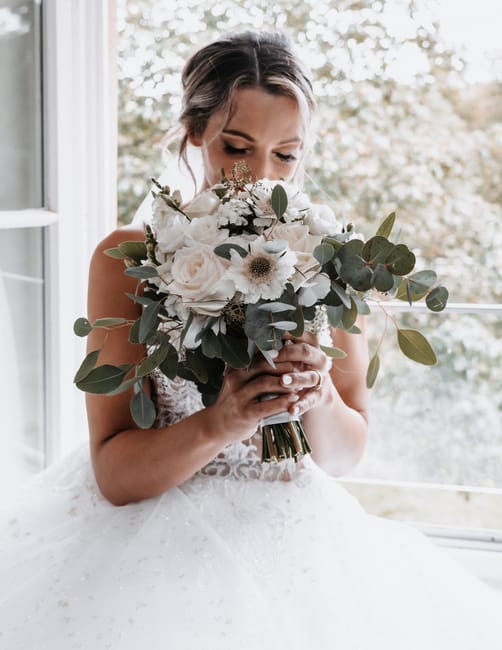
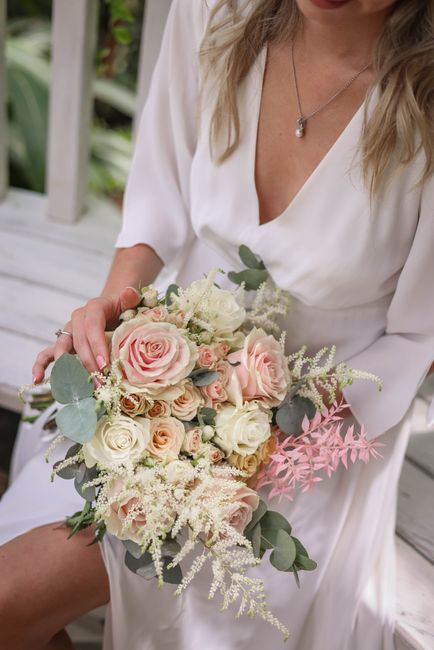
Before: The initial bouquet idea was a soft, hand-held design with pale pink, ivory, and greenery. The brief was romantic, but the mock-up felt slightly too loose. The flowers were pretty, but the outline was uneven, and the bouquet did not read cleanly from a distance. In photos, the top of the bouquet looked a little busy while the lower half felt thin.
What changed:
- The stem structure was tightened for a more balanced silhouette.
- One or two flower types were reduced so the design felt calmer.
- A stronger focal bloom was introduced near the centre.
- The greenery was softened so it framed rather than distracted.
- The ribbon finish was refined to match the dress tone more closely.
After: The bouquet looked more intentional. It still felt soft and romantic, but the shape was clearer, the colour balance was stronger, and the bouquet looked more elegant in hand and in photographs. The final version did not scream for attention. It simply belonged there. That is usually the real goal.
In a Kensington setting, this kind of refinement often matters because the surroundings can be visually busy. Elegant architecture, refined interiors, and polished event spaces tend to reward bouquets that are controlled, not chaotic. A bouquet should enhance the scene, not fight it.
If you are exploring specific wedding floral formats, pages like table flowers, corsages, and wedding flowers in Kensington SW5 can help you think in terms of the whole floral story rather than just one arrangement.
And honestly, that is where the real difference shows. A bouquet rarely fails because it is ugly. It usually fails because it is slightly off in proportion, tone, or confidence. Small things. But flowers are a bit like that.
Practical Checklist
Use this checklist if you are planning your own bouquet or reviewing a florist's before-and-after idea.
- Have I defined the mood in plain words?
- Does the bouquet suit the dress, not just the colour palette?
- Have I checked seasonal availability?
- Do I know the bouquet shape I want?
- Have I decided what flowers are essential and what is flexible?
- Will the bouquet look good in ceremony light and photos?
- Is the size comfortable to hold for a long period?
- Have I reviewed ribbon, wrap, or finishing details?
- Do I understand what substitutions may happen if needed?
- Have I checked delivery timing and order terms?
If you can tick most of those boxes, you are in very good shape. If not, no panic. This is exactly the sort of planning that benefits from one more conversation, one more photo, or one more round of edits. It's fine. Really.
Conclusion
A Kensington wedding bouquet case study before and after is more than a visual comparison. It is a practical way to understand how a floral idea becomes a finished wedding detail that feels intentional, flattering, and memorable. The strongest bouquets are rarely the most complicated ones. They are the ones that fit the dress, the venue, the season, and the person carrying them.
When you look at a bouquet transformation properly, you stop judging flowers only by colour and start noticing proportion, texture, handling, and emotional tone. That is where good floristry really shows. Quietly. No fuss. Just the right effect at the right moment.
If you are planning a Kensington wedding, start with clarity, ask for a before-and-after perspective, and keep the whole day in view rather than just the bouquet alone. That is the kind of approach that usually leads to better results, and less stress too.
Get a free quote today and see how much you can save.
And if you are still deciding, that is perfectly normal. The right bouquet has a way of making itself known once the details start lining up.
Frequently Asked Questions
What does a Kensington wedding bouquet case study before and after actually show?
It shows how a bouquet changes from the initial concept or rough build into the final finished design. That usually includes improvements in shape, balance, colour harmony, and how the bouquet sits in the hand and photographs.
Why are before and after bouquet examples useful for wedding planning?
They help you see the design choices clearly instead of relying on vague inspiration. You can compare what was changed, why it was changed, and whether a similar approach would suit your own wedding.
How do I know if a bouquet will suit my dress?
Look at silhouette, neckline, fabric, and overall formality. A structured gown often suits a cleaner bouquet, while a softer dress can carry a looser arrangement. If in doubt, show the florist a dress photo early on.
What flowers work best for a Kensington wedding bouquet?
That depends on the season, your palette, and the style of the wedding. Roses, lisianthus, orchids, lilies, hydrangeas, and mixed seasonal blooms are all common choices, but the best option is the one that suits your brief and timing.
Is a more expensive bouquet always better?
Not necessarily. A higher spend may give you larger blooms, more variety, or a more elaborate style, but the strongest bouquet is the one that is well-proportioned and well-finished. A carefully edited bouquet can look more elegant than an overly full one.
How far in advance should I plan my wedding bouquet?
Earlier is always easier, especially if you want specific flowers or a more bespoke finish. Planning in good time helps with seasonality, availability, and delivery coordination. Late changes are possible sometimes, but they narrow your options.
Can a bouquet be changed after the first design draft?
Yes, and that is often the point of a case study or design review. You might adjust the colour balance, size, stem length, or flower mix after seeing the initial version. Small changes can make a big difference.
What is the most common mistake couples make with wedding bouquets?
Choosing a bouquet that looks lovely online but does not suit the dress, venue, or carrying comfort. The second most common mistake is waiting too long to refine the brief, which can lead to rushed decisions later on.
How can I keep my bouquet looking fresh on the day?
Good handling matters. Keep it in water or a cool place until needed, follow florist care advice, and avoid leaving it in direct heat or sunlight for too long. A well-made bouquet should last through the key moments if it is handled properly.
Should my bridesmaids' bouquets match mine exactly?
Not necessarily. They should coordinate in style, colour, and scale, but they do not need to be identical. In many weddings, a slightly simpler version of the bridal bouquet works better for bridesmaids.
Do Kensington wedding florists usually offer guidance on bouquet style?
Yes, a good florist should help you make sense of shape, seasonality, and style choices. If they cannot explain why a certain bouquet works, that is worth paying attention to. Clear advice is part of the service.
What should I ask for when requesting a bouquet quote?
Ask about flower type, size, style, seasonal substitutions, delivery, ribbon finish, and what happens if availability changes. Clear questions now save confusion later, and usually lead to a more accurate quote.